


[DATA CENTERS & VDC]

3D Laser Scanning for Data Center Construction & VDC

Data center schedules leave no room for rework: duct, cable tray, busway and equipment have to land where the coordination model says they will. Milestone laser scanning gives your VDC team field-verified conditions at each stage — slab, structure, MEP rough-in, white space — so installed work is checked against the model before the next trade covers it. We scan from Houston across Texas, Louisiana and Oklahoma.

[SCOPE OF SERVICE]

What do we scan on a data center project?

Milestone Scanning
•  Scans at agreed milestones: slab, structure, MEP rough-in and before close-in.
•  Every milestone registered to project control, so datasets overlay.
•  A dated record of installed work before it is covered.
Slab Elevations
•  Slab elevation heat maps from the point cloud.
•  High and low spots flagged before raised floor and racks go in.
•  Deviation from design elevation, available on request.
MEP & Clash Verification
•  Installed duct, pipe, cable tray and busway compared to the coordination model.
•  Conflicts found while they are still cheap to move.
White Space & Equipment Fit
•  Clearances verified for racks, cooling units and containment.
•  Equipment pads and anchor locations checked before the set.
Retrofits & Expansions
•  Existing conditions for operating halls being expanded or re-powered.
•  Non-contact capture with no downtime in live halls.
Turnover Record
•  A registered point cloud archive for the owner's facility team.
•  One dataset for future fit-outs and upgrades.
[BENEFITS]

Why do VDC teams scan at every milestone?

See Pricing
COST GUIDE

Catch it before close-in

Installed work is verified before ceilings, slabs and walls hide it.

Fewer field conflicts

Trades build against measured conditions, not the last revision of the model.

One visit per milestone

Each stage is captured in a single site visit, scheduled around trade work.

Complete coverage

Full 3D capture of the hall, not spot checks with a tape measure.

Shared baseline

The GC, MEP trades and owner work from the same registered point cloud.

Clear tolerance

Fraction-of-an-inch point clouds, with the instrument matched to the tolerance you specify.
[DELIVERABLES]

Typical deliverables

arrow rightarrow right
REQUEST A QUOTE
Registered point cloud (.RCP/.RCS, .E57, .LAS) with 360° panoramas
As-built 2D CAD (plans, sections, elevations, details)
Scan-to-BIM models (Revit/IFC) for structural, MEP, and architectural — coordinated through our modeling partners
Deviation/fit-up reports, available on request, for dimensional control and QA/QC
Point cloud archive for turnover, future fit-outs and upgrades
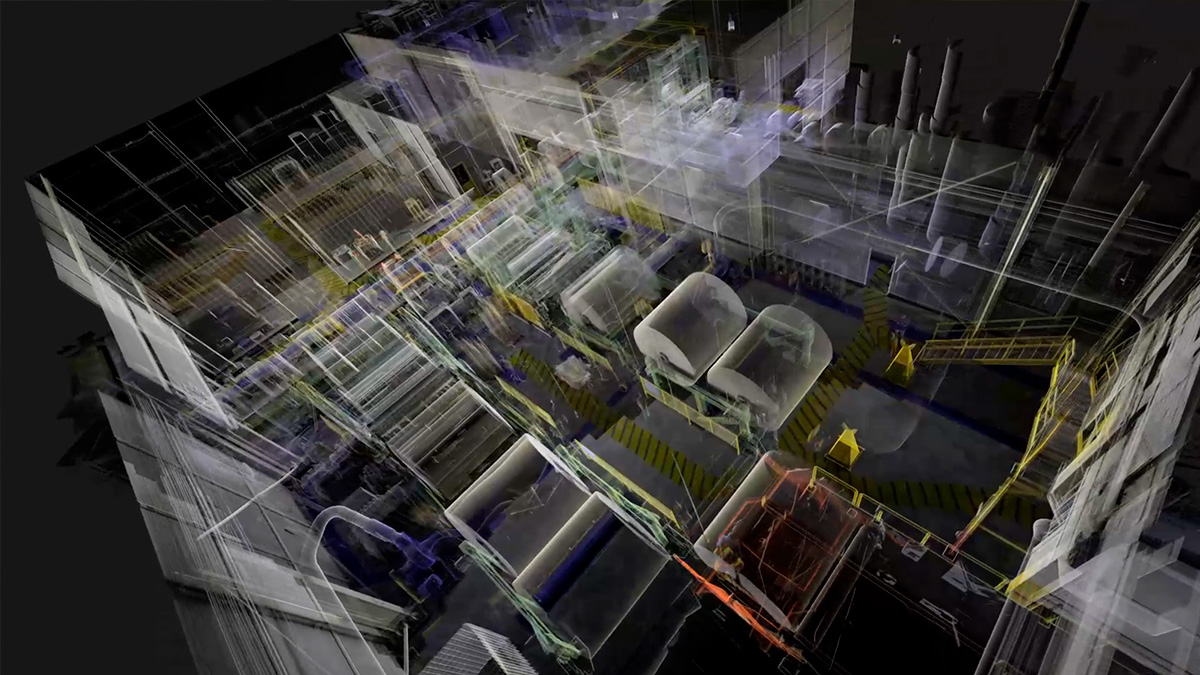
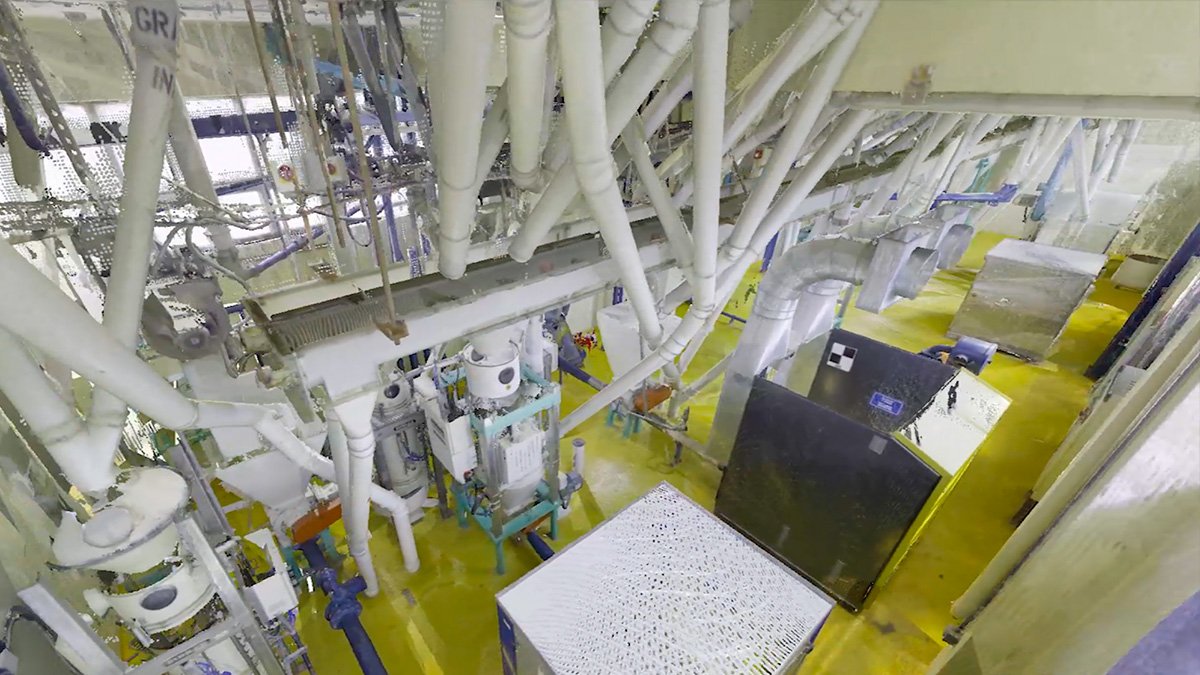
Point cloud of packaging-plant equipment captured with a 3D laser scanner
[USE CASES]

Where does scanning fit on a data center project?

Slab scans before raised floor and racks
MEP coordination and as-built verification before close-in
Milestone documentation for GC and owner progress records
Equipment fit-up and prefabrication validation
Retrofits and expansions of operating data halls — existing conditions without downtime
Site documentation — equipment yards, pads and clearances
3D point cloud of a packaging plant production line from laser scanning
[about SERVICE]

Frequently
Asked Questions

Answers for VDC managers, MEP contractors and owners' representatives.
get in touch
How often should a data center be scanned during construction?
arrow up
It depends on the schedule, but most teams scan at the milestones where work gets covered: slab, structure, MEP rough-in and before ceilings close. We agree the milestones and survey control with your VDC team before the first scan, so every dataset overlays.
What can milestone scanning capture?
arrow up
•  Slab elevations before flooring and racks
•  Structure and embeds
•  Duct, pipe, cable tray and busway
•  Electrical rooms and generator yards
•  Containment, racks and white space layout
•  Equipment pads and clearances
•  Roof equipment and penetrations
How accurate is the data?
arrow up
Tripod-based scanners such as the Leica RTC360 are manufacturer-rated under 1/8 in at 33 ft; mobile (SLAM) capture typically runs about 1/4 to 3/4 in, tightened with survey control. Model tolerance is agreed to scope before mobilization and documented in the deliverable.
How fast do we get results?
arrow up
Field capture at each milestone is usually one visit, scheduled around trade work. The registered point cloud follows within days, so conflicts are flagged before the next trade moves in
.
What deliverables do I receive?
arrow up
•  Point clouds (E57, RCP, LAS, etc.)
•  2D drawings (plans, sections, elevations)
•  3D CAD or BIM models (Revit, AutoCAD, IFC, etc.)
•  Deviation reports, available on request, comparing construction vs. design
Do I need special software to view the scans?
arrow up
No. We can provide files compatible with free viewers (Autodesk ReCap, CloudCompare, etc.), so you don’t need expensive software to review your project.
Can you scan an operating data hall?
arrow up
Yes. Scanning is non-contact, quiet and eye-safe, so live halls stay in service. We follow your access, escort and change-control procedures.
How does it save me money?
arrow up
•  Reduces costly change orders
•  Prevents design clashes before construction
•  Eliminates repeat site visits
•  Documents installed work before it is covered
What does milestone scanning cost?
arrow up
Most projects run $0.25–$0.50 per square foot per scan for a registered point cloud, with a $5,000 minimum; repeat milestones on the same site reduce mobilization. Models and reports are priced separately.
Is laser scanning safe?
arrow up
Yes. Terrestrial scanners use eye-safe, Class 1 lasers, making the process completely safe for people and equipment.
[GET IN TOUCH]

Let's Scope Your Data Center Project

Send your milestones, square footage and deliverable — we'll confirm the fee, turnaround and what's included.
info@dynamicjt.com
+1 (832) 746-1497
1120 NASA Parkway, Suite 220D Houston, TX. 77058
Houston-Based Field Team
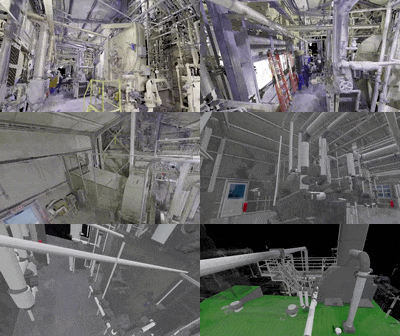
Point cloud flythrough animation of a scanned industrial building
Thank you! Your submission has been received!
Oops! Something went wrong while submitting the form.